Note that certain heart sound patterns can resemble S2 splitting. A late systolic click plus a single-second heart sound (S2) in one such condition. In this case, a late systolic click occurs immediately before the second heart sound. This incorrect leads to a finding of a split S2.
To correctly evaluate the sounds, carefully to the two sounds. If the first of the pair is of higher frequency and shorter duration than the second, it is a late systolic click followed by a single second heart sound.
Moving the stethoscope chestpiece to the pulmonic area is also a good technique for distinguishing a late systolic click from a split S2. The single S2 will be present and the late systolic click will diminish or disappear
Degeneration of the mitral valve leaflets causes these leaflets to make a "clicking" sound during late systole. In the video, you will see prolapse of the anterior lateral mitral valve leaflet which generates the late systolic click.
Listen
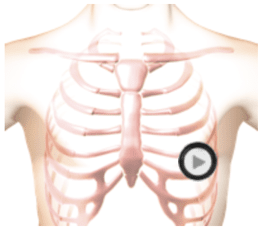
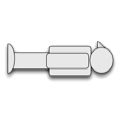
The patient's position is supine.