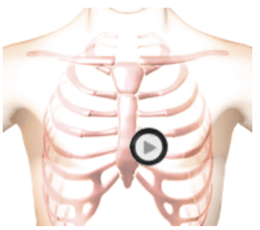
This recording is an example of severe tricuspid regurgitation. The first heart sound is normal and S2 is unsplit. A loud, rectangular, pansystolic murmur is present as well as a brief, rumbling, diamond-shaped diastolic murmur. In the cardiac animation video, observe the enlarged right atrium and right ventricle. Notice the turbulent blood flow from the right ventricle into the right atrium. This is the systolic murmur. Observe the brief turbulent blood flow from the right atrium to the right ventricle in diastole. This is caused by too much blood in the right atrium which forces blood back into the ventricle during diastole producing the flow rumble. To differentiate tricuspid regurgitation from mitral regurgitation, the maximum intensity of the tricuspid murmur is heard at the left lower sternal border. In addition, the murmur intensity increases with inspiration.
Listen
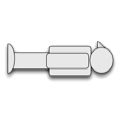
The patient's position is supine.